
Costa Mesa Past Residents, Era by Era
A Costa Mesa previous residents search crosses several record layers. Deeds show Costa Mesa ownership, not every household member. Directories, census schedules, permits, obituaries, probate, and newspapers answer different questions, so the source map should mark each layer's years and access.
| Source | Years It Covers | Where Held | What It Shows |
|---|---|---|---|
| Costa Mesa recorded deeds | Orange County formed 1889 forward; exact online index start not stated | RecorderWorks, Clerk-Recorder, Archives | Transfers, liens, legal descriptions |
| Costa Mesa recorder copy references | 1982-forward numbering guidance; older references | Clerk-Recorder | Year plus six-digit number, or book/page/instrument |
| City and criss-cross directories | Exact Costa Mesa-inclusive years not located | OCPL, Archives, Historical Society | Occupants or subscribers by name and address |
| Costa Mesa federal census context | Public through 1950 | NARA, OCPL, partner sites | Household members, relationships, age, birthplace, later address |
| Costa Mesa permits | Online and archival cutoff not located | Document Search, CPRA | Construction, alterations, applicants, inspections |
| Costa Mesa obituaries and probate | Case or publication specific | Newspapers, Superior Court, Archives | Death, heirs, estate property, later whereabouts |
| Sanborn maps | Exact Costa Mesa sheets not confirmed | LOC collection, library subscriptions | Building footprint, use, materials, address context |
For Costa Mesa title history, begin with parcel and deed evidence. Shift to Costa Mesa directories and census for occupants, then use permits, newspapers, obituaries, and probate to fill gaps. An era is a working range, not proof that every year or address is covered.
Trace Costa Mesa Past Residents by Deed
For a Costa Mesa parcel, normalize the modern address with the Orange County Assessor and OC land-record GIS. Record the APN, situs, subdivision cues, tract or lot, and legal description. The GIS parcel schema can expose owner, mailing, sale, deed, prior-sale, old-APN, and legal block/lot/book-page fields. Use these as bridge fields, not a resident list.
Costa Mesa's municipal parcel feature service is unusually rich: published fields include owner name components and a spouse or second owner, mailing fields, voting district, sale and prior-sale dates, document number, deed type, lender, building, assessment, old APN, subdivision, and legal block/lot/book-page data. Queries are limited to 2,000 records, so narrow an address or APN instead of treating it as a bulk resident roll.
- For a Costa Mesa parcel, write down the APN and legal description before searching names.
- Use the current Costa Mesa owner or assessee as a grantee lead in RecorderWorks within a date range.
- For a Costa Mesa candidate, record the instrument number, date, grantor, grantee, deed type, and legal description, then order the image when the parcel needs confirmation.
- Search the Costa Mesa prior grantor as an earlier grantee and repeat the chain backward, checking the legal description at each step.
- If the Costa Mesa index or reference trail fails, carry names, date spans, tract or lot details, and known references to the Clerk-Recorder or Archives. Staff will not perform a title search.
- Grantor and grantee
- The grantor conveys or records an interest; the grantee receives it in that instrument. Neither role proves occupancy.
- Chain of title
- A linked sequence of Costa Mesa recorded transfers for the same land, checked against the legal description.
- Legal description
- The formal Costa Mesa land identity that can connect a parcel across changing street labels.
- Instrument number
- The Costa Mesa recording reference used to order a document, with different guidance for 1982-forward and older records.
Costa Mesa owners and residents are different layers. A matching situs and mailing address may support an owner-occupancy clue, but it does not prove who sleeps there. Trusts, entities, renters, and protected addresses can break the chain.
Costa Mesa Deed Records and Old Labels
Costa Mesa RecorderWorks names a party by grantor or grantee, plus recording date, document type, instrument number, and older book or page references. It is a free index, not an image viewer. Document images are ordered separately, and the Clerk-Recorder will not perform a title search by phone, in person, or by mail.
Treat 1982 as numbering guidance, not a confirmed online cutoff. Orange County instructions for Costa Mesa deeds say 1982-forward records use the recording year plus a six-digit instrument number. Pre-1982 copy requests need book, page, and instrument references when available. The inspected official page did not state the earliest year searchable in RecorderWorks.
For Costa Mesa copies, records cost $1 per page; certification adds $1 per document or map. Mail the request with a self-addressed stamped envelope and check payable to County of Orange at 601 N. Ross Street, Santa Ana, CA 92701, or use the official copy instructions. Call 714-834-2500 for copy questions.
The county also mails a free courtesy notice with the first page when a specified title-affecting document is recorded. It is a fraud-warning notice, not a searchable history of past residents.
Old Costa Mesa labels add another trap. The 1884 Los Angeles County directory files the present Costa Mesa area under Newport. A local study found addresses under Santa Ana through 1968 and Costa Mesa beginning in 1969. Search Newport, Santa Ana, and Costa Mesa, then test the match with tract, lot, APN, or legal description. No official Costa Mesa-wide house-number crosswalk was located.
Costa Mesa Past Residents: Census, Directories
Costa Mesa deeds identify owners. City and telephone directories, reverse sections, and census schedules can identify occupants. Exact Costa Mesa-inclusive directory runs were not located as an official online shelf list, so start with the Donald Dungan Library and OCPL genealogy resources. Ask for Costa Mesa, Newport Harbor, Santa Ana, Orange County, telephone, criss-cross, and reverse-directory variants. See broader collections on the Costa Mesa city directory page.
For Costa Mesa records from 1940 and 1950, copy the name, spouse or widow notation, occupation, address, phone, and any owner or renter mark. Compare age, relationship, birthplace, and address context in the matching census. A subscriber is not every adult in the home, and a missing line can mean nonpublication, nonresponse, new construction, annexation, or a changed label.
Costa Mesa library access can vary by branch, card status, licensed database, or in-library login. Partner collections may require a free account, affiliate library, or rights-holder site. Cite the original image or page when possible, not only a database transcription.
- Begin with a Costa Mesa deed, obituary, census, yearbook, or family paper that supplies a known year and address.
- Search Costa Mesa alphabetical entries for surname variants and transcribe the abbreviation marks.
- Check the Costa Mesa reverse or criss-cross section for the street and house number, including nearby numbers.
- Move through a Costa Mesa volume earlier and later, not only by decade; note a first or last appearance and any “removed to” note.
- Pair the Costa Mesa result with the 1940 or 1950 census and cite the page or image reference.
- Costa Mesa criss-cross directory
- An address-first section that lists a street and number before an occupant or subscriber.
- Directory gap
- A missing line may reflect publication or address conditions, not a confirmed move.
- Census pairing
- Use household relationships and ages to separate same-name adults from one another.
Costa Mesa Permit Records Fill Address Gaps
Costa Mesa permit files can date construction and alterations and name an owner, applicant, architect, engineer, contractor, or inspector. They are address evidence, not a resident roll. Search Costa Mesa Document Search by street address and known permit or project number before filing a request.
If a Costa Mesa result does not appear, use the Costa Mesa CPRA form and request the permit jacket, application, plans available for public inspection, final or inspection history, and certificate of occupancy by exact address and date range. The department will explain inspection, copies, cost, and exemptions. Copyrighted plans and security-sensitive details may be limited.
Older acquired or submitted files may remain in City Clerk Document Archives after newer permit data moved to the TESSA cloud portal. A permit date can explain a new house or a late directory appearance, but it cannot replace a deed, directory, or census match.
Costa Mesa municipal files begin after Costa Mesa's June 29, 1953 incorporation and later annexations. An older house can therefore appear first in Orange County material, while the city archive and county record describe the same Costa Mesa parcel with different labels.
Costa Mesa Historical Society Resident Clues
The Costa Mesa Historical Society resource collection lists directories and phone books, yearbooks, maps, oral histories, newspaper and clipping files, 27,000+ photographs, and 1,000+ books. Those Costa Mesa holdings can connect an address to a family, school, business, military site, or civic group when a deed only names an owner.
Costa Mesa newspaper runs noted in the research include Costa Mesa Herald 1924-36, Globe 1935-36, Globe-Herald 1936-61, Costa Mesa News 1978-87, Independent 1987-95, selected Daily Pilot years, Newport Ensign 1970-88, and Newport Balboa Press 1940-45. Confirm access and OCR with volunteers.
The Costa Mesa Historical Society resources page also shows the map and local-history context behind this address work.
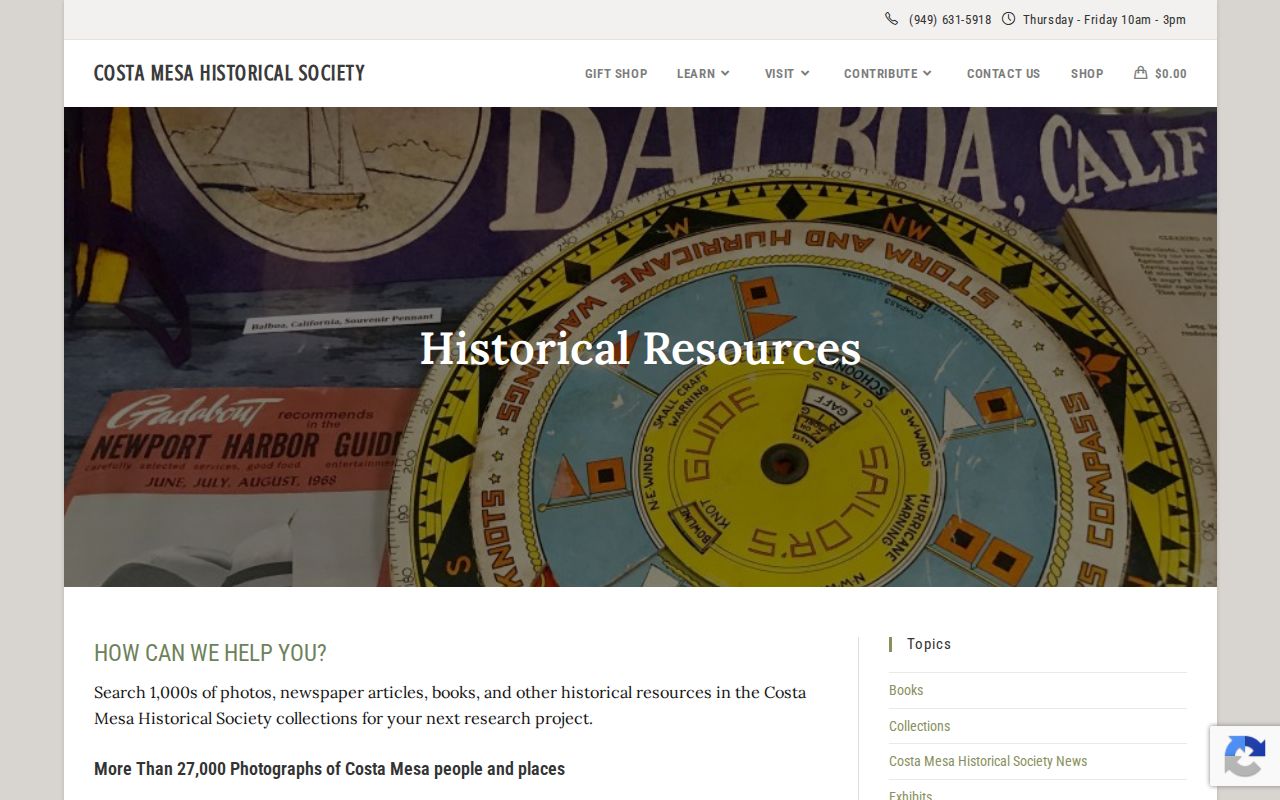
That visual source can point to a collection, but a deed image, directory page, or census schedule still supplies the record-level proof.
The Costa Mesa Society's complete 45-interview 1978 oral-history collection is available by appointment. Its listed address is 1870 Anaheim Ave.; phone 949-631-5918; hours Thursday-Friday 10-3 or appointment. Verify access before travel.
Costa Mesa Obituaries, Probate, Sanborn Maps
When a Costa Mesa directory entry disappears, use obituaries, newspaper notices, cemetery records, and probate rather than declaring a move. Public probate filings may name a decedent, petitioner or personal representative, heirs, and estate property. Sensitive files can be restricted or redacted.
For Costa Mesa research, Orange County Archives, in the Old Orange County Courthouse, is a local fallback at Room 108, 211 W. Santa Ana Blvd., Santa Ana. Reference service is 714-834-2536, with published hours of 9-noon and 1-4:30. Start with the Archives gateway and call about collections or copies.
Sanborn maps may show building footprint, use, materials, and address context, but exact Costa Mesa sheets were not confirmed. Search the Library of Congress collection carefully, because these maps rarely name occupants. For Costa Mesa federal context, NARA Riverside supports Southern California records, including census.
For Costa Mesa estate clues, Orange County Superior Court case access may show a public probate caption, case number, filing date, parties, events, and status. Document images vary, and confidential or sealed material remains restricted.
Limits on Costa Mesa Resident Research
Costa Mesa previous residents research is strongest when a land record anchors the parcel and a people record supports occupancy. No Costa Mesa source is a complete list of everyone who lived in a house. Renters, children, short stays, protected participants, and people absent from directories may leave no public trace.
Lawful house history. Use Costa Mesa records for family history, estate research, house history, and personal civic curiosity. Do not use a name, address, or record trail to stalk, harass, threaten, impersonate, trespass, or track a living person.
When a Costa Mesa online search stops, use the Costa Mesa library catalog, Historical Society, Orange County Archives, the Clerk-Recorder copy route, or a focused CPRA request. Keep the source title, page or image reference, place label, and uncertainty. A clean “unknown” is safer than turning an owner into a resident.
A Costa Mesa CPRA request should identify existing records with the department, address or APN, record type, and narrow date span. The agency generally has ten calendar days to determine whether it has disclosable records, with a limited written extension for unusual circumstances.